Japan and what I already loved before I got there
I flew into Tokyo and left from Kansai, and somewhere between those two cities I think I finally closed a loop that started when I was a kid. I learned Japanese young, fell into the language before I really understood what it meant to fall into a culture, and somewhere along the way that turned into a quiet infatuation with everything from old traditions to the pop culture I grew up consuming. So when I finally went, I wasn't discovering Japan so much as confirming it, checking the version in my head against the real thing. Mostly it held up. Sometimes it surprised me anyway.
The first thing that got me wasn't a temple or a neon street, it was the sound design of everyday infrastructure. Train station jingles, the little melodies that play before doors close, the chimes that tell you which platform you're on without you having to look. I knew about this going in, I'd heard the clips online a hundred times, but hearing it live, half-asleep and jet-lagged at Narita, hit differently. It felt like the whole country had agreed that even logistics deserve a pretty melody.
Convenience stores or konbini didn't wreck me in a way they would most people. Having come from another Asian country with 7-Eleven and Family Mart meant I didn't have to plan my mornings around what item was in the fridge.
I spent a long time in older neighborhoods just looking at how thresholds work, the way a doorway or a noren curtain signals a shift from public to private without a single word. There's a kind of architecture of politeness in how spaces are divided, low fences, gravel paths, sliding doors, that I'd read about academically but never felt with my body until I was standing in it.
Staying in Katsushika
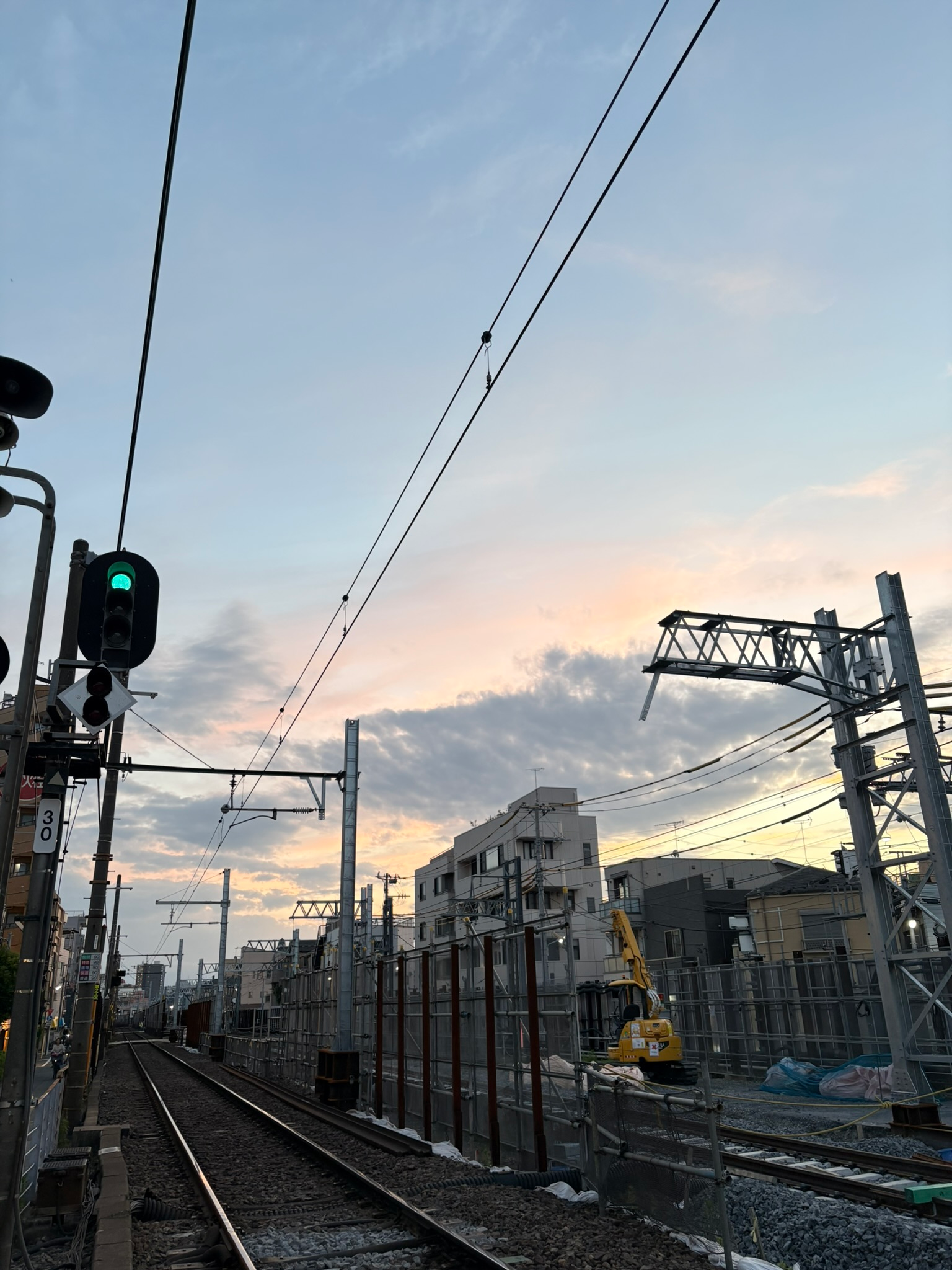
Most people flying into Tokyo gravitate toward Shibuya or Shinjuku, somewhere central and convenient. I went the other way and based myself in Keisei Tateishi, deep in Katsushika, a place almost no one I talked to had heard of. The reason was Captain Tsubasa, the soccer anime I grew up on, about a kid named Tsubasa Ozora chasing a dream of going pro. The series is set in Katsushika because that's where its creator, Yoichi Takahashi, is actually from, and it shows. The narrow streets, the riverside pitches, the unpolished, working-class feel of the neighborhood aren't just background art, they're the real texture of the place the story came out of.
Staying there meant I wasn't just visiting a setting, I was living inside the same atmosphere that shaped the show. Quiet, traditional, a little rough around the edges, train tracks cutting straight through residential blocks, that homey rhythm that never makes it into a typical Tokyo itinerary. It felt less like sightseeing and more like stepping into the actual source material.
I never told anyone the real reason. To everyone around me it just looked like a quirky choice of neighborhood, slightly off the beaten path, nothing more. But underneath it I'd quietly built a few things into the trip just for myself, small detours and choices arranged around a version of me that was still eight or nine years old, still glued to a television, still wanting something I never got to fully have back then. It wasn't really about Katsushika at all. It was about closing a loop that had been left open since childhood.
So I kept it to myself. Every bronze statue of Tsubasa and the rest of the cast scattered around the area, I walked past in silence, never pointing them out, never explaining what they meant or why I'd lingered a second too long near one. No commentary, no making it a moment for anyone else. Just a private acknowledgment between me and whatever kid version of myself was still in there, satisfied in a way I didn't need to perform or share.
Sensoji, except I'd already been here
Some places you visit cold, with no expectations, and let them surprise you. Sensoji was never going to be one of those for me. Long before I ever set foot in Tokyo, I'd already seen this temple dozens of times through Makoto Shinkai's films, the lantern, the gate, the crowd, all rendered so precisely that the real place almost felt secondary to the animated one.
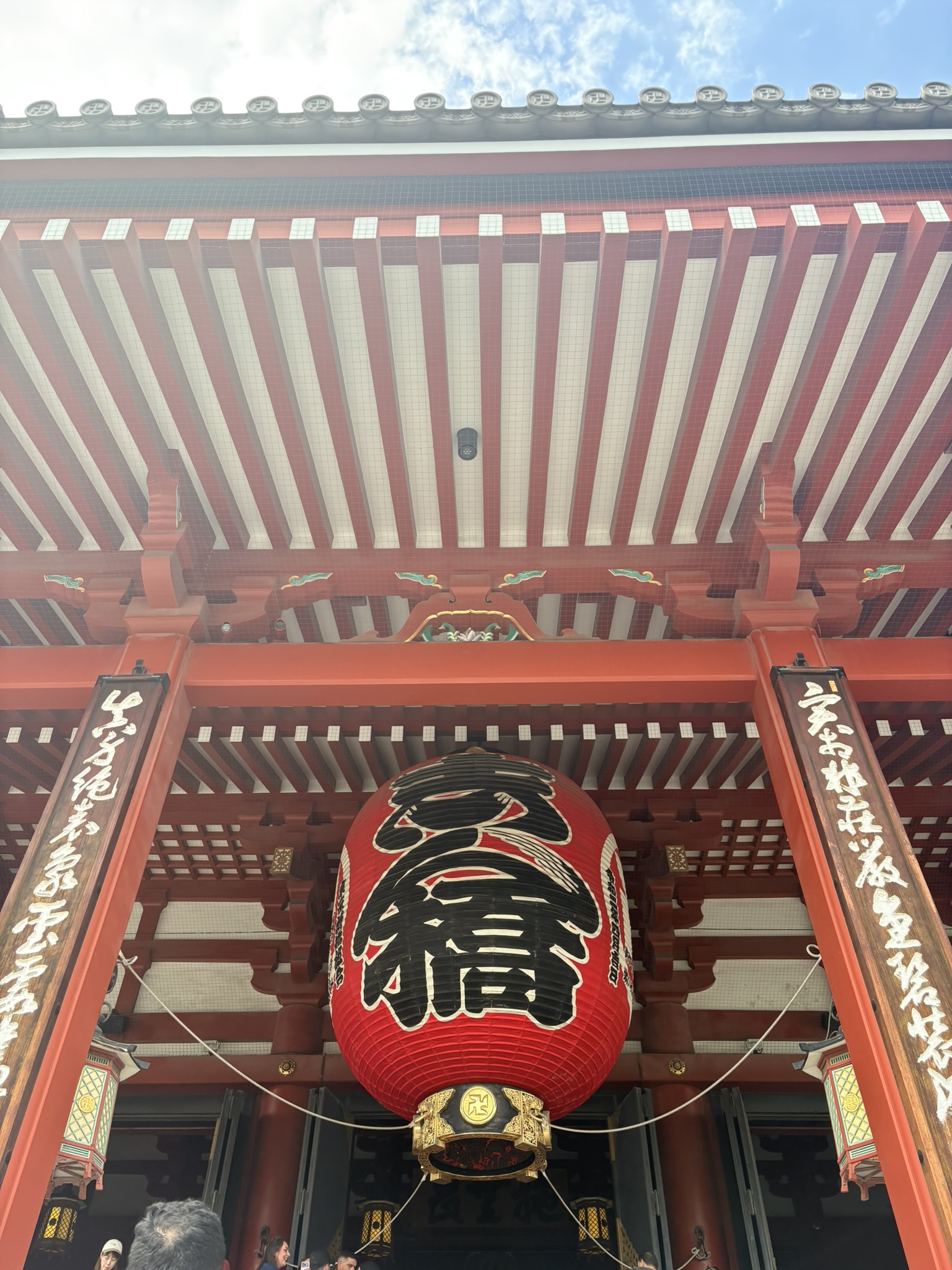
It started without any warmup. No long walk where the temple slowly comes into view, no real sense of arriving. One moment I was moving through the crowd near the station, and the next I was standing directly beneath Kaminarimon, that massive red lantern hanging overhead with its dark calligraphy, the gate's guardian statues watching from behind their lattice screens. It felt like being dropped straight into a scene rather than approaching one, immediate immersion with no transition.
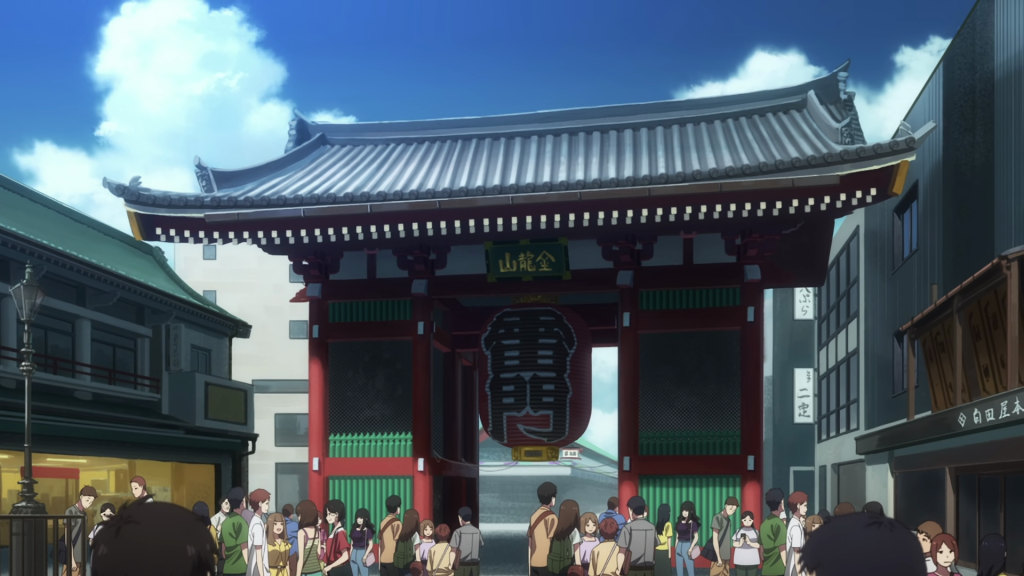
And it was a scene I already knew by heart. The lantern, the red pillars, the dense but oddly cinematic crowd funneling beneath the gate, I'd watched Shinkai animate this exact view so many times that standing under it in person felt strange in a quiet way, like stepping into a frame I'd already memorized instead of seeing it for the first time. Reality didn't surprise me. It just confirmed what I already had in my head.
From there the crowd just carried me forward, onto Nakamise-dori, shop stalls lined up on both sides selling sweets, trinkets, and souvenirs, the noise and color thickening the closer we got to the main hall. Incense curled up from the big burner out front, people waving the smoke toward themselves out of habit more than belief. And then the hall itself came into view, red and gold, steady, completely unbothered by the thousands of people who pass beneath it every single day.
None of it felt like discovery. It felt like finally getting to stand inside something I'd already had a relationship with for years.
Inari, Konkon, Koi Iroha
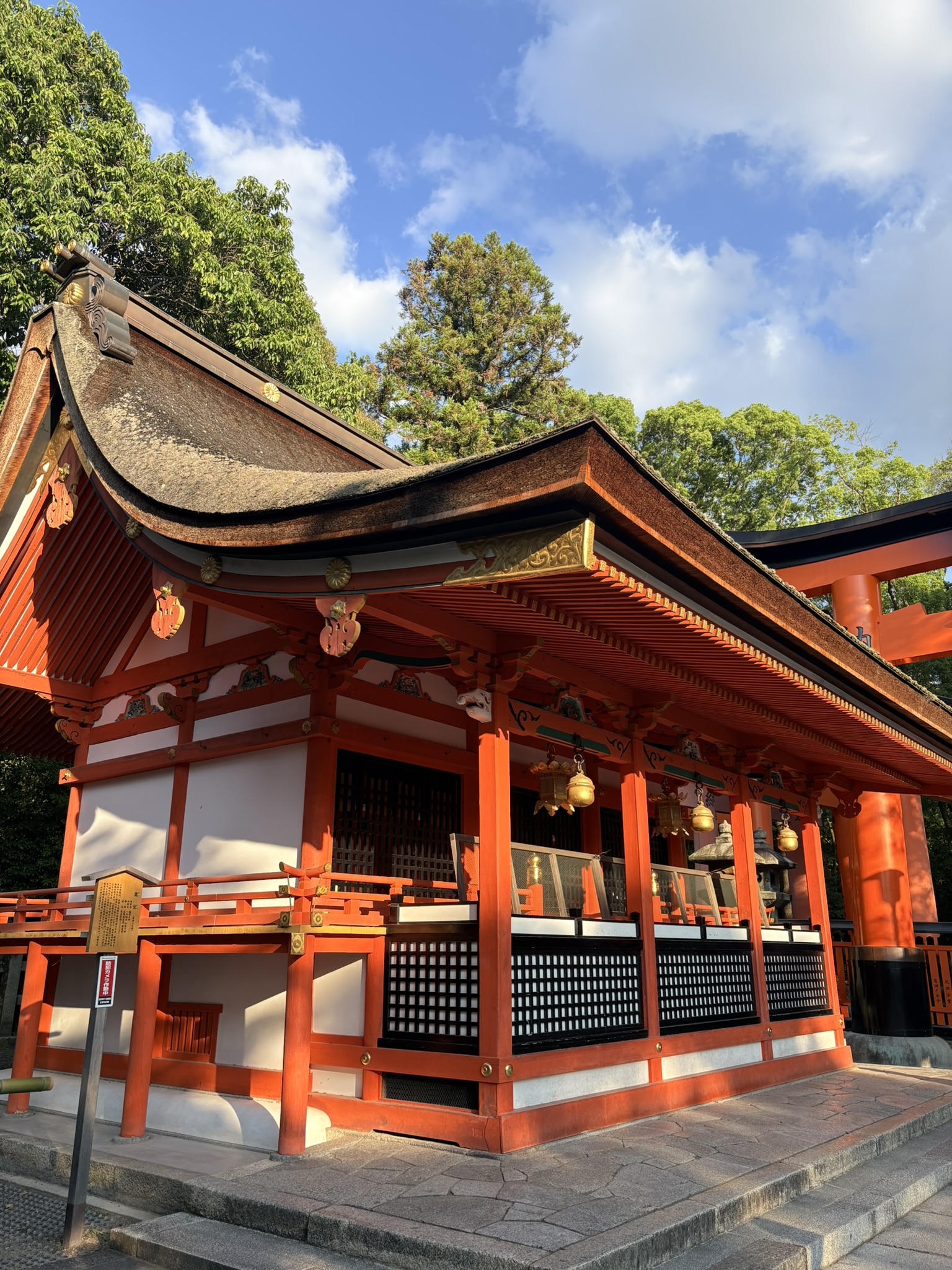
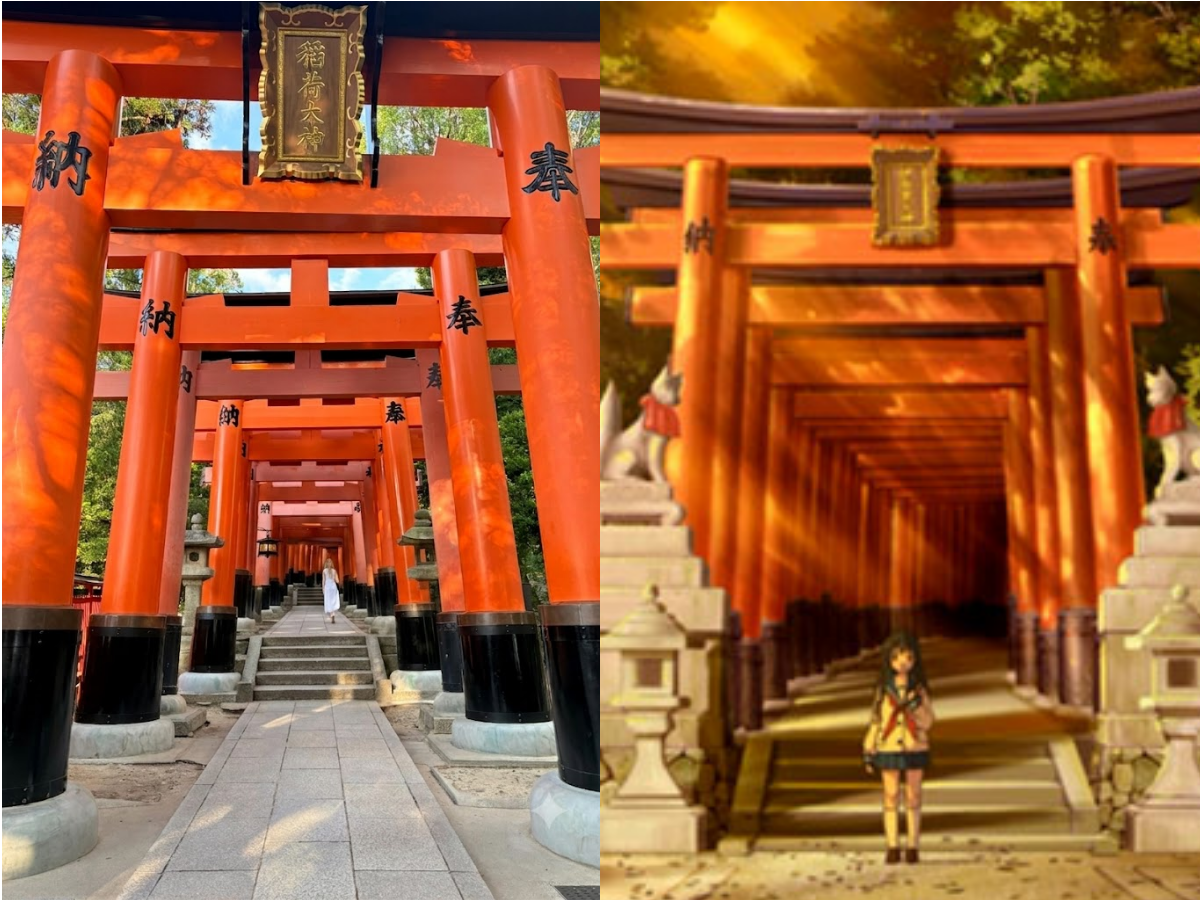
After Sensoji, Kyoto pulled me toward Fushimi Inari Taisha, and this one needed no comparison to anime to be overwhelming on its own. Thousands of vermilion torii gates stacked one after another, climbing up the mountain in a tunnel of orange that seems to keep going no matter how far you walk. Each gate is donated, names and dates inked down the pillars in black, and the deeper in you go, the quieter and more dreamlike it gets, sunlight slicing through the gaps, stone fox statues watching from the entrances, lanterns lined up like punctuation marks along the path.
But this place had its own private history with me, older than the trip itself. Inari, Konkon, Koi Iroha was one of my favorite anime as a kid, back in elementary school, watching it in the living room because my own room was still under construction at the time. It's a soft, quiet show about a girl who becomes the avatar of the fox god Inari, and Fushimi Inari Taisha sits right at the center of it. I didn't fully register back then that the gates I was watching on screen were a real place I could one day stand inside.
So walking under those torii as an adult wasn't just a Kyoto landmark ticked off, it was circling back to a kid sitting on a living room floor, watching a show about foxes and shrines because his own bedroom wasn't ready yet. The mountain didn't know any of that, but I did, every step up through the gates.
A few other things worth mentioning
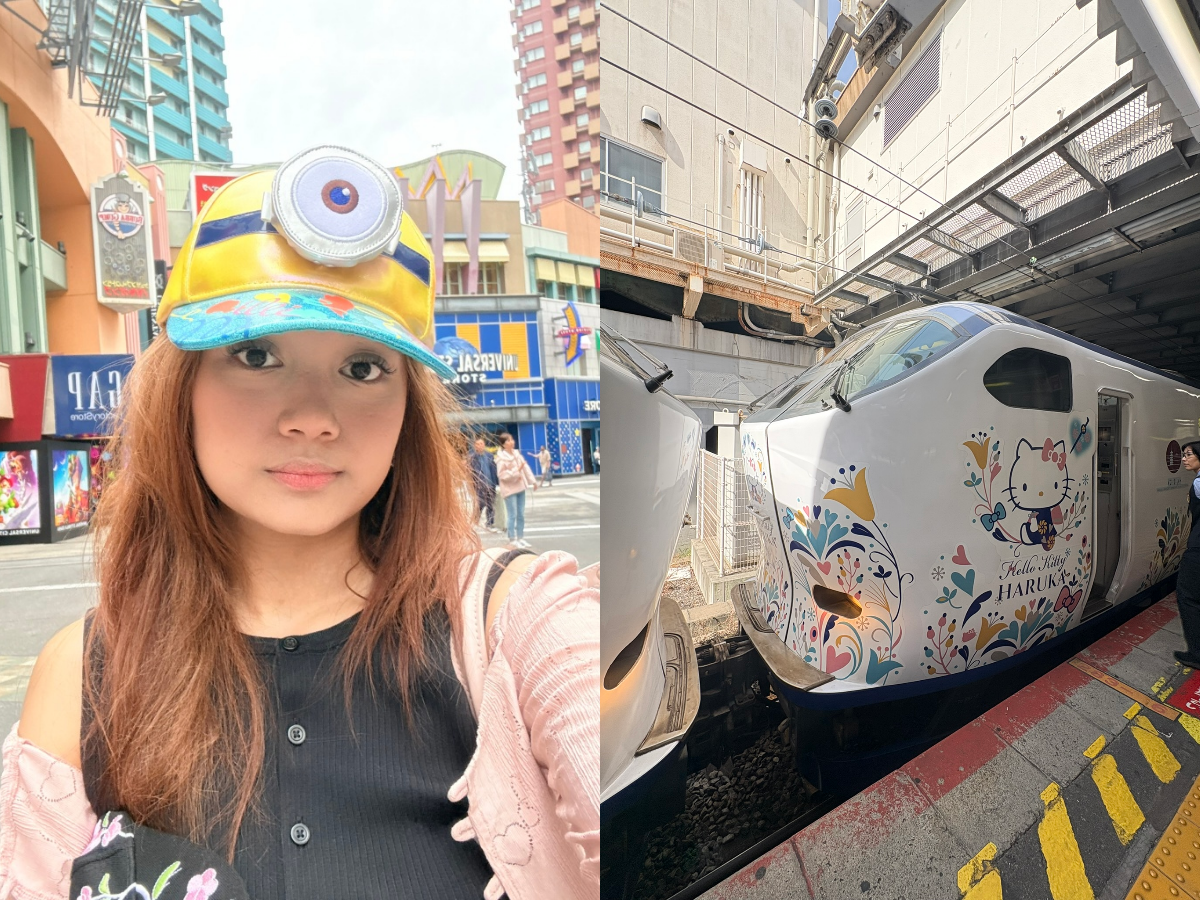
Universal Studios Osaka deserves its own little shoutout, mostly because of how thoroughly it committed to the Minion theming. I ended up in a glittery yellow Minion cap with a single googly eye perched on top, completely unnecessary and completely worth it, standing in the middle of the Citywalk strip with its candy-colored buildings and oversized signage in the background. The whole area has that exaggerated, theme-park-bright aesthetic, half Hollywood backlot, half Japanese commercial district, and it was hard not to get swept into buying something ridiculous just because it was there.
Then there was the Hello Kitty Haruka, the train that took us from Osaka to Kansai Airport, decked out front to back in soft pastel illustrations, Hello Kitty in a little kimono surrounded by flowers and hearts, the design only Japan would commit to on a full-sized airport express train. It felt like a fitting, slightly whimsical bookend to the trip.
Except we ended up taking it a day earlier than we were supposed to. Somewhere in the scheduling I miscounted, and only realized my mistake once we were already at the airport, flight tickets and passports in hand, looking at a flight that wasn't actually ours yet. It was mortifying for about five minutes, type of mistake that makes you replay every step that led to it, and then it just became funny. We stood there laughing it off, half embarrassed, half amused that even with all the planning, all the research, all the years of knowing this country inside and out from anime and language study, I still managed to show up a full day early to our own departure.

The one thing I still grieve: Akihabara
Out of everything, this is the part that still sits with me. I never made it to Akihabara. Not for lack of time exactly, more for reasons I can't fully put into words, something that just happens on a trip even when you've planned around it for years. And of everywhere I didn't get to, this is the one absence that actually hurts.
Akihabara had been at the top of my list since I was a kid, not for the electronics or the arcades everyone else goes for, but because of AKB48. The actual idol group, dozens of members organized into teams, built around the idea of idols you could meet, idols whose growth you followed in real time through handshake events and theater performances. The name itself is the giveaway, AKB is short for Akihabara, the district is baked directly into the group's identity. I grew up on their songs, the bright, layered pop hooks, the sheer scale of the group, and somewhere in elementary school that turned into AKB0048, the anime spinoff that took the same idol concept and launched it into space, idols as resistance fighters performing illegal concerts in a future where entertainment itself had been banned. It was dramatic and earnest in exactly the way only a kids' anime about idols saving culture through music could be.
I still know the songs today, word for word in places, melodies that have stuck with me longer than most things from that era of my life. So not standing in Akihabara, not walking the streets that the group and the show were both literally named after, is the one gap in this trip I haven't been able to shake. Everything else I found cool, everything else felt like closing a loop. This one stayed open.
If I go back, I want to go by myself. Not because this trip wasn't good, it was, but because there's a difference between traveling with people you love and traveling in a way that lets you be completely, unapologetically selfish about what you actually want. This time I kept things quiet. I picked Tateishi for Captain Tsubasa and never said why. I walked past the bronze statues without stopping to make a moment out of it. I let Fushimi Inari be a shared photo op instead of admitting it was tied to a show I watched on a living room floor as a kid. There was always a small filter between what I wanted and what I let myself show.
Going alone removes that filter entirely. No one to explain myself to, no one to feel self-conscious in front of, no need to keep the childhood stuff folded quietly into the itinerary instead of letting it be the itinerary. I want a trip where Akihabara isn't squeezed in or skipped due to circumstance, but is the actual center of the day, where I can stand in front of an AKB48 theater and just feel whatever I feel without managing anyone else's patience or interest. I want to linger at a shrine because of an old anime and not worry that I'm taking too long. I want to be as indulgent and specific and childish about this as I actually am inside, instead of editing it down to something more palatable for company.
That's the whole point of going back alone. Just finally giving the eight-year-old version of me a trip with no audience and no compromise.