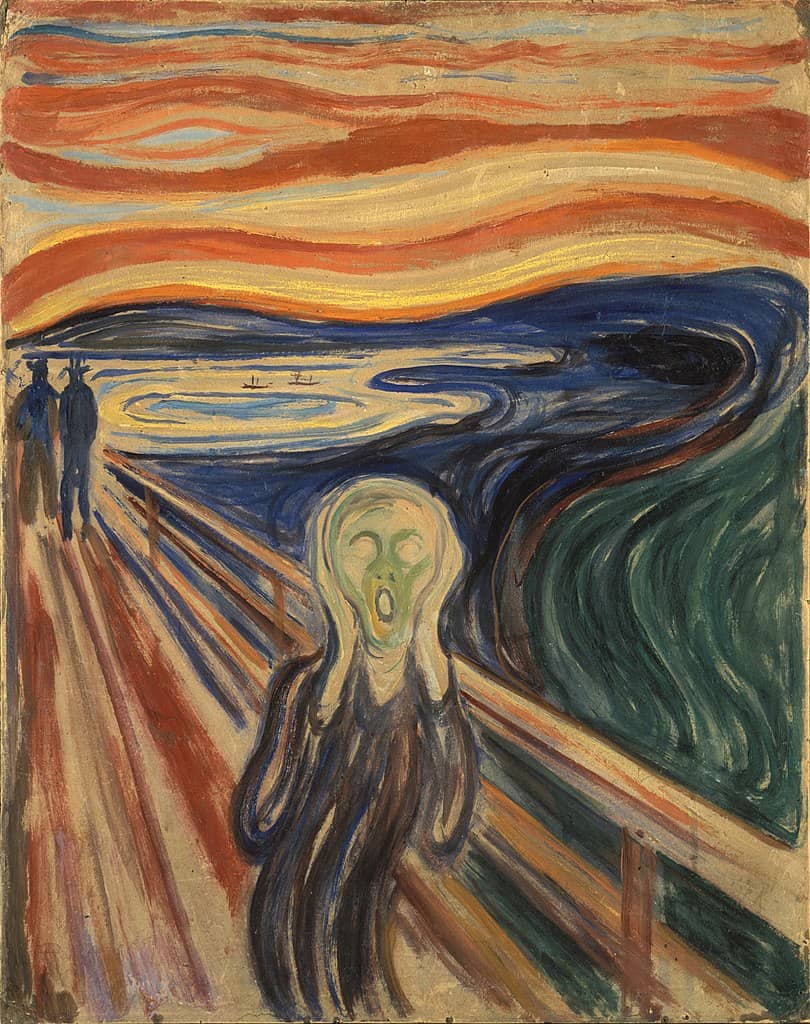
You've gotten so good at not letting things get to you. You've gotten so good at not reflecting, but detaching.
Not in the way people mean when they say they're "over it"--dramatic, performative, clearly still very much under it. I mean actually, functionally, chemically unbothered. Something happens that would have flattened you years ago, and you watch yourself not reacting. You note the absence of reaction. You think: huh, okay, moving on.
It's become automatic. You don't decide to detach anymore. You just do. The glass wall went up so gradually you didn't notice when it became permanent architecture. You used to feel everything in your body--anxiety in your chest, grief in your stomach, that specific buzzing behind the eyes when you were about to cry. Now there's just space. Clean, well-lit, climate-controlled space. You can see the thing that happened. You can understand why it matters. But you don't feel it landing.
People tell you you're doing better. Stronger. And sure--you are functional. You don't spiral. You don't send the 2am texts, don't cry in parking lots, don't get stuck in the loop of why did they, why don't I, what does it mean. You just process. And file. And delete.
And then you start to wonder if "better" is the right word. Or if you've just become really proficient at a sophisticated form of quitting.
The thing is, you've always been this instrument. High sensitivity, low filter. You felt everything--good or bad--at volumes that made other people uncomfortable. Joy that felt like flying. Sadness that felt like drowning. Love that was almost violent in its intensity. And yeah, it was exhausting. It made you difficult. Made you chaotic. But it was also the point. Like that was the material you were made from. That reactivity, permeability, that willingness to be completely colonized by experience--that was your actual strength. Not your ability to manage it, but your capacity to survive it while still feeling it.
Now I can't tell if you've developed better boundaries or just lost your nerve.
You keep testing yourself. You'll read something that should wreck you, wait for the familiar catch in your throat, and nothing. You'll remember something painful, watch for the somatic echo, and get silence. It's efficient, sure. But it also feels like you are haunting your own life. Like you're walking through rooms you used to live in, touching objects that used to mean things, and feeling the shape of the meaning without the weight.
Part of you thinks this is just a season. Protection. The psyche doing what it needs to do to keep the system operational after overload. Hibernation isn't death, it's just deferred metabolism. Maybe you're rebuilding something. Maybe the feelings will come back online when it's safe.
But another part--the part that wakes up at 3am and can't find the panic button --worries that you've fixed yourself into a smaller shape. That you kept breaking so you learned to bend less, and now you don't bend at all. That you've confused peace with vacancy.
You don't know which reading is correct. You don't know if you should be trying to tear down the glass or installing better blinds. Maybe this numbness is maturity. Maybe it's just scar tissue.
What you do know: you miss the weather. You miss being weathered. You miss the version of you that would get absolutely leveled by a song or a sunset or a stranger's kindness, that would love people with an intensity that terrified them, that would walk around raw and open and constantly at risk of being completely undone by the world.
That person was a mess. But that person was alive in a way you're not sure you are.
And you're stuck here in this analysis, watching yourself watch yourself.